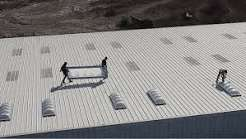

Skylights can look like solid surfaces, but many cannot hold a person’s weight. The main ways to prevent falls through them are skylight screens, covers, guardrails, and personal fall arrest systems. In construction, OSHA requires protection wherever workers are exposed to a fall of six feet or more through a hole or skylight.
Falls through roof openings remain a serious cause of injury and death in roofing, maintenance, and inspection work. The danger comes from a false sense of security: a skylight that has held up for years can still fail the moment someone steps or leans on it.
Key Takeaways
- Never treat a skylight as a walking surface.
- Screens, covers, and guardrails protect against falls through the opening.
- Old plastic and acrylic panels weaken with sun exposure and age.
- Dirt, paint, snow, and tar can hide a skylight from view.
Why Skylights Fail
Plastic and acrylic domes become brittle over time from ultraviolet exposure and temperature swings. Glass can crack under impact. Even panels that appear intact can shatter under a sudden load, especially when a worker trips, slips, or steps back without looking.
Protection Methods Compared
| Method | How it works | Consideration |
| Skylight screen | Rigid screen installed over the opening | Must be strong enough to bear a worker’s weight |
| Cover | Solid cover marked and secured | Must be secured against displacement |
| Guardrail | Perimeter barrier around the skylight | Needs proper height and strength |
| Personal fall arrest | Harness, lanyard, and anchor | Requires training and a rescue plan |
For a fuller look at skylight fall protection, including how to compare systems for different roof types, review your options before work begins rather than during it.
Steps Before Roof Work Begins
- Survey the roof and mark every skylight and opening.
- Check the condition of existing panels and frames.
- Install screens, covers, or guardrails before other tasks start.
- Brief every worker on the locations and hazards.
- Use personal fall arrest where physical barriers are not practical.
Mistakes to Avoid
Covering a skylight with a loose sheet of plywood without securing or marking it creates a hidden hazard. Relying on a single worker’s memory of where skylights are is another common mistake. Clear labels and physical barriers work better than verbal warnings.
Inspection and Maintenance
Inspect protection systems at the start of each shift and after severe weather. Replace corroded frames and damaged screens. Keep records so that responsibility is clear and repeat problems show up.
Bottom Line
Treat every skylight as an open hole until proven otherwise. A screen or guardrail installed before work starts costs far less than the alternative.
Author Bio: A safety writer covering fall protection, roofing hazards, and OSHA compliance. Writes practical guidance for contractors, facility managers, and inspection crews.