Buyers Decide in Eight Seconds. Staging Is What They Decide About.
Estate agents have a bleak little saying: buyers make their decision in the first eight seconds inside the door, then spend the viewing looking for evidence they were right. Whether or not the number is literal, the psychology is documented — first impressions anchor everything that follows, and a home that feels bright, spacious, and cared-for collects the benefit of every doubt that follows. Learning how to stage a home for sale on a budget is therefore not interior decorating; it is the highest-return marketing spend in the entire sale, because the professional version costs thousands and the effective version — the one this guide teaches — costs a weekend, some storage boxes, and under a few hundred in targeted supplies. The method in order: the three principles underneath every staging trick, the ruthless declutter and depersonalise pass that does 60% of the work for free, a room-by-room budget playbook (entrance, living room, kitchen, bedrooms, bathroom — in the order buyers weight them), and the cheap fixes and photography-day details that make the listing itself perform before a single viewing happens. It extends our guide to selling your home faster — pricing brings the clicks, staging closes the gap between viewing and offer — and it pairs with our landlord’s guide to how to calculate rental yield, for sellers whose next move after the sale is buying the rental this one funds.
The Three Principles: Light, Space, and a Story Without People
Every staging decision serves one of three masters. Light: bright rooms photograph bigger, feel cleaner, and read as better maintained; buyers unconsciously equate dim with damp and old. Every tactic — cleaned windows, removed net curtains, higher-wattage warm bulbs, mirrors opposite windows — is light engineering. Space: buyers are purchasing volume, and furniture is how volume gets hidden; rooms staged for sale carry roughly two-thirds of the furniture of rooms staged for living, arranged to show traffic flow and floor, especially at the edges — a visible skirting line around a room makes it measure larger in the mind. A story without people: the home should suggest a life the buyer wants — coffee cups by a sunny window, a set dining table, a made bed like a hotel’s — while containing no evidence of your life specifically: no faces in photographs, no children’s names, no toiletries army, no fridge-magnet autobiography. The buyer’s imagination is the most persuasive salesperson in the building; staging’s entire job is removing everything that interrupts it. Hold the three principles and you can improvise the rest of this guide in any property on earth.
The Free 60%: Declutter, Depersonalise, Deep Clean
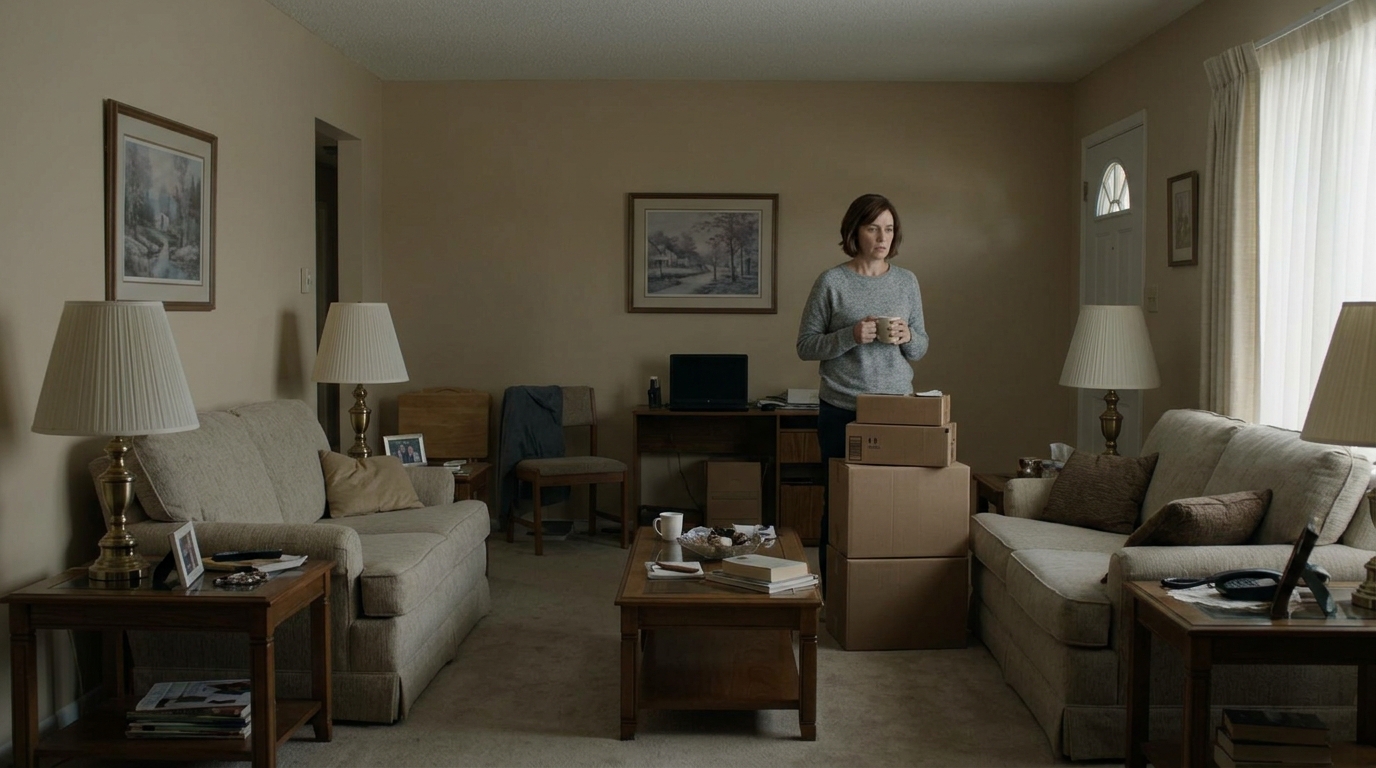
Before spending anything, do the three passes that cost only effort. Declutter to the rule of surfaces: every horizontal surface in the house keeps at most two or three objects; everything else is boxed, stored (hire a small storage unit or borrow a garage — the cost returns itself in the sale price), or removed. Counters, shelves, floors, the top of the wardrobe — the visual noise floor of the entire home drops, and rooms gain their staged size without moving a single wall. Depersonalise: family photos down (replace one or two with neutral art or leave the wall calm), collections boxed, children’s artwork honoured and stored, bathroom cabinets’ contents decanted out of sight, and anything political, sporting, or niche-interest removed — not because buyers judge, but because every specific detail reminds them the house is someone else’s story. Deep clean to hotel standard: grout, glass, oven, windows inside and out, skirting boards, the smell of the carpets (the single most underestimated factor — a home that smells clean outsells a home that merely looks it, and a simmering pot of water with lemon and herbs on viewing day outperforms any plug-in). Sellers routinely rank this weekend of work as the most exhausting and the most profitable of the entire sale; agents rank it the same way, from the offers.
What Not to Do: Staging Mistakes That Backfire
A short list of well-meant errors to avoid. Over-staging: a home dressed like a show apartment — place settings for six, chess mid-game, towels rolled like a spa — reads as theatrical, and buyers start wondering what the performance is hiding; the target is “beautifully kept real home,” one notch below a magazine. Hiding defects with decor: a rug over a damaged floor, a picture over damp, a scented candle masking a smell — buyers and surveyors find all of it, and discovered concealment poisons trust in everything else the house claims; fix cheap defects honestly and disclose the rest. Spending on taste-specific upgrades: staging money goes on neutrality — paint in warm whites, plain bedding, plain towels — never on bold colours or statement pieces that half the market will mentally budget to remove; you are selling their future home, not exhibiting your taste. Staging once, then living normally: a staged home must stay staged through the viewing period — beds made daily, counters kept clear, the viewing-day towel untouched — which is mildly exhausting and exactly why it works: every buyer walks into the same first eight seconds that sold the photos.
Room by Room on a Budget, and Photography Day
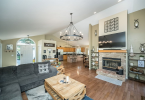
Now spend the small budget where buyers look. Entrance: the eight-second room — a new door mat, a working warm porch light, a mirror, one plant, zero shoes in view; paint the front door if it is tired (the cheapest kerb-appeal multiplier that exists). Living room: sofa squared to the room’s lines, cushions in two coordinated colours, one throw, curtains hung high and wide of the window to fake taller glass, rug defining the seating zone, and the television off and unremarkable. Kitchen: the money room for many buyers — counters cleared to near-emptiness (one fruit bowl, one plant, the kettle), cupboard fronts wiped, a new tea towel wardrobe, and under-sink chaos hidden; a tired kitchen gains the most from a small, ruthless edit. Bedrooms: white or pale bedding (inexpensive sets photograph like hotels), beds made with hospital corners, bedside lamps matched, wardrobes a third emptied so they read as spacious. Bathroom: fresh white towels (new, cheap, reserved for viewings), toiletries gone, a single plant or candle, grout pen on tired lines, mirror polished — bathrooms sell cleanliness, not luxury. Photography day is its own discipline, because the listing photos are the true first viewing: all lights on, blinds open, toilet seats down, cars off the drive, bins invisible, beds perfect, and shoot (or have the agent shoot) in bright daylight. Spend the weekend, spend the small budget in that order, and the market will do the rest — staged homes do not merely sell faster; they sell to buyers who have already moved in, mentally, before they make the offer.