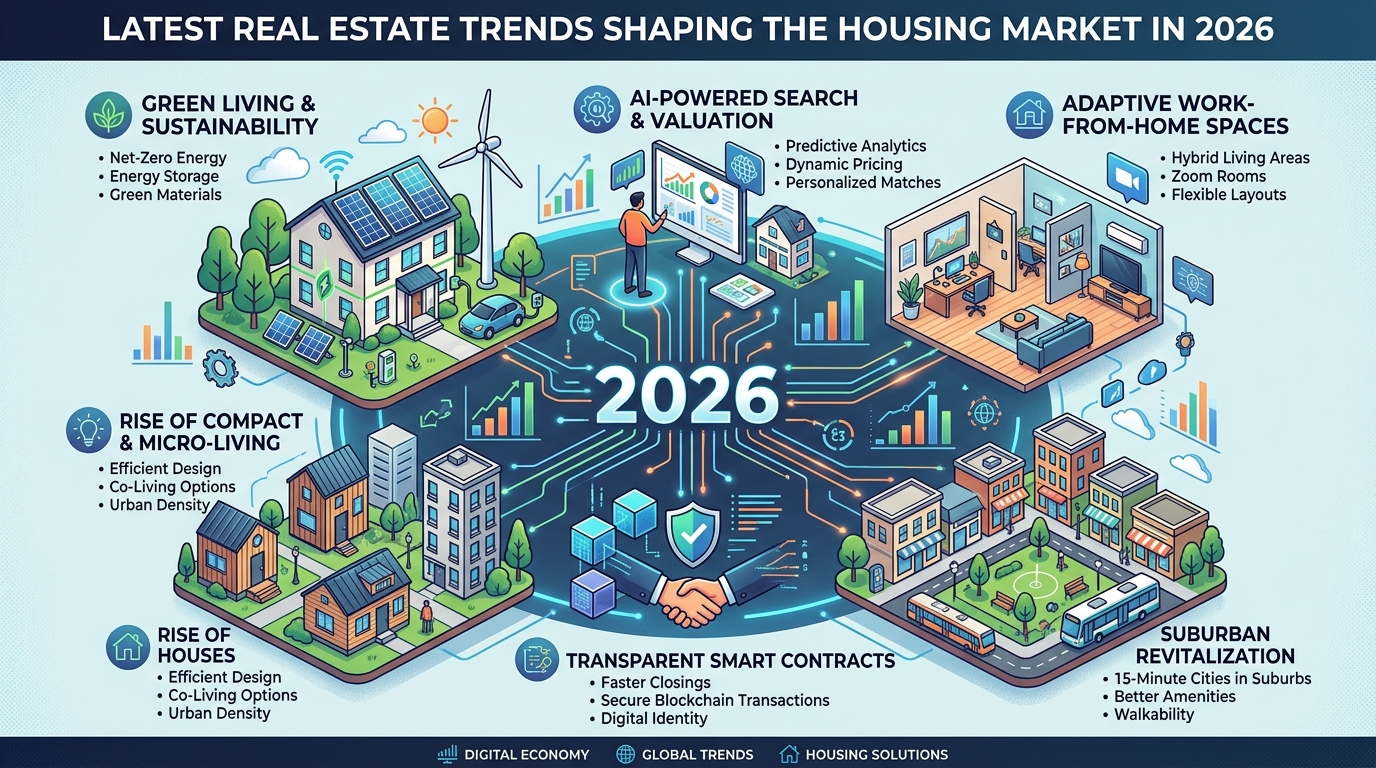

The real estate market in 2026 is going through rapid changes driven by economic conditions, technological advancements, and shifting buyer preferences. Property demand is increasing in many regions while supply struggles to keep up, creating a competitive environment for buyers and investors. At the same time, digital tools and new lifestyle trends are reshaping how people choose homes and interact with the real estate market. Understanding these evolving trends is essential for making informed decisions in today’s complex housing landscape.
Rising Property Prices and Housing Demand
One of the most significant trends in 2026 is the continuous rise in property prices across many regions. High demand combined with limited housing supply has pushed prices upward, especially in urban and rapidly developing suburban areas. As more people look for better living conditions and investment opportunities, competition in the housing market continues to increase.
This growing demand has made it challenging for first-time buyers to enter the market. Many individuals are now exploring alternative options such as smaller homes or properties in less expensive areas. Developers are also responding to this demand by building more housing units, but supply is still struggling to keep pace with the increasing number of buyers.
Impact of Interest Rates on Real Estate
Interest rates play a crucial role in shaping the real estate market. When interest rates are low, borrowing becomes more affordable, encouraging more people to invest in property. However, rising interest rates increase the cost of loans, which can slow down buying activity and reduce overall demand.
In 2026, fluctuating interest rates are creating uncertainty among buyers and investors. Many people are becoming more cautious with their financial decisions, carefully evaluating loan options and long-term affordability. This has led to a more balanced market where both buyers and sellers need to adapt to changing financial conditions.
Shift Toward Suburban and Remote Living
The shift toward suburban living is becoming more noticeable as remote work continues to grow. Many people prefer living in less crowded areas where they can enjoy larger homes, better environments, and lower property costs. Suburban areas are attracting families and professionals who no longer need to stay close to city centers.
This trend has also influenced real estate development patterns. Builders are focusing on creating modern housing communities in suburban regions with better infrastructure and amenities. As remote work becomes a permanent option for many industries, this shift is expected to continue shaping the housing market in the coming years.
Role of Technology in Real Estate
Technology is transforming the real estate industry by making property transactions faster and more efficient. Online platforms, virtual tours, and digital listings allow buyers to explore properties without physically visiting them. This has made the process more convenient and accessible for people from different locations.
Artificial intelligence and data analytics are also playing a major role in market analysis. These tools help predict property trends, evaluate prices, and provide personalized recommendations to buyers. As technology continues to evolve, it will further improve transparency and efficiency in the real estate sector.
Changing Buyer Preferences
Buyer preferences are evolving due to changes in lifestyle and work patterns. Modern buyers are looking for homes that offer comfort, flexibility, and advanced features such as smart home technology. Properties with home office spaces and energy-efficient systems are becoming increasingly popular.
Sustainability is also becoming an important factor in buying decisions. Many buyers prefer eco-friendly homes that reduce energy consumption and environmental impact. This shift is encouraging developers to adopt green building practices and focus on sustainable housing solutions.
Government Policies and Market Influence
Government policies have a strong impact on the real estate market. Housing schemes, tax benefits, and loan programs can influence demand and affordability. Many governments are introducing policies to support first-time buyers and promote housing development.
However, regulatory changes can also create challenges for investors and developers. Changes in property taxes or building regulations can affect project costs and profitability. Staying informed about policy updates is important for making smart real estate decisions.
Investment Opportunities in 2026
The real estate market continues to offer attractive investment opportunities despite certain challenges. Rental properties remain a popular option for generating steady income, especially in high-demand areas with growing populations.
Long-term investments are also gaining attention as investors focus on properties that are likely to increase in value over time. Careful research and understanding of market trends are essential for identifying profitable opportunities in the real estate sector.
Challenges in the Housing Market
The housing market in 2026 is not without its challenges. Rising construction costs and limited land availability are affecting new development projects. These factors contribute to higher property prices and reduced affordability for buyers.
Economic uncertainty and market fluctuations also create risks for investors. Sudden changes in interest rates or government policies can impact market stability. Managing these risks requires careful planning and a long-term approach.
FAQs
Why are property prices increasing in 2026
Property prices are increasing due to high demand, limited supply, and rising construction costs, especially in urban and developing areas.
Is 2026 a good time to invest in real estate
Yes, it can be a good time if you carefully analyze market trends, choose the right location, and plan for long-term investment.
How do interest rates affect the housing market
Higher interest rates make loans more expensive, reducing demand, while lower rates encourage more people to buy property.
Why are people moving to suburban areas
Remote work and the desire for better living conditions are encouraging people to move to less crowded and more affordable suburban areas.
What role does technology play in real estate
Technology improves property search, market analysis, and transaction processes, making real estate more efficient and accessible.
Conclusion
The real estate market in 2026 is shaped by rising demand, evolving technology, and changing lifestyle preferences. While challenges such as affordability and economic uncertainty remain, the market also offers strong opportunities for buyers and investors who stay informed. Understanding these trends allows individuals to make smarter decisions and successfully navigate the modern housing landscape.