
Choosing between urban and suburban living has become one of the most important lifestyle and real estate decisions in 2026. With changing work patterns, rising property prices, and evolving personal preferences, people are carefully evaluating where they want to live. Urban areas offer convenience and career opportunities, while suburban regions provide space, affordability, and a quieter lifestyle. Understanding the advantages and disadvantages of both helps individuals make better housing decisions.
The debate between urban and suburban living is no longer just about location; it is about lifestyle, financial planning, and long-term goals. Remote work, infrastructure development, and housing affordability have reshaped this comparison. As a result, both options now offer unique benefits depending on individual needs and priorities.
Lifestyle Differences Between Urban and Suburban Areas
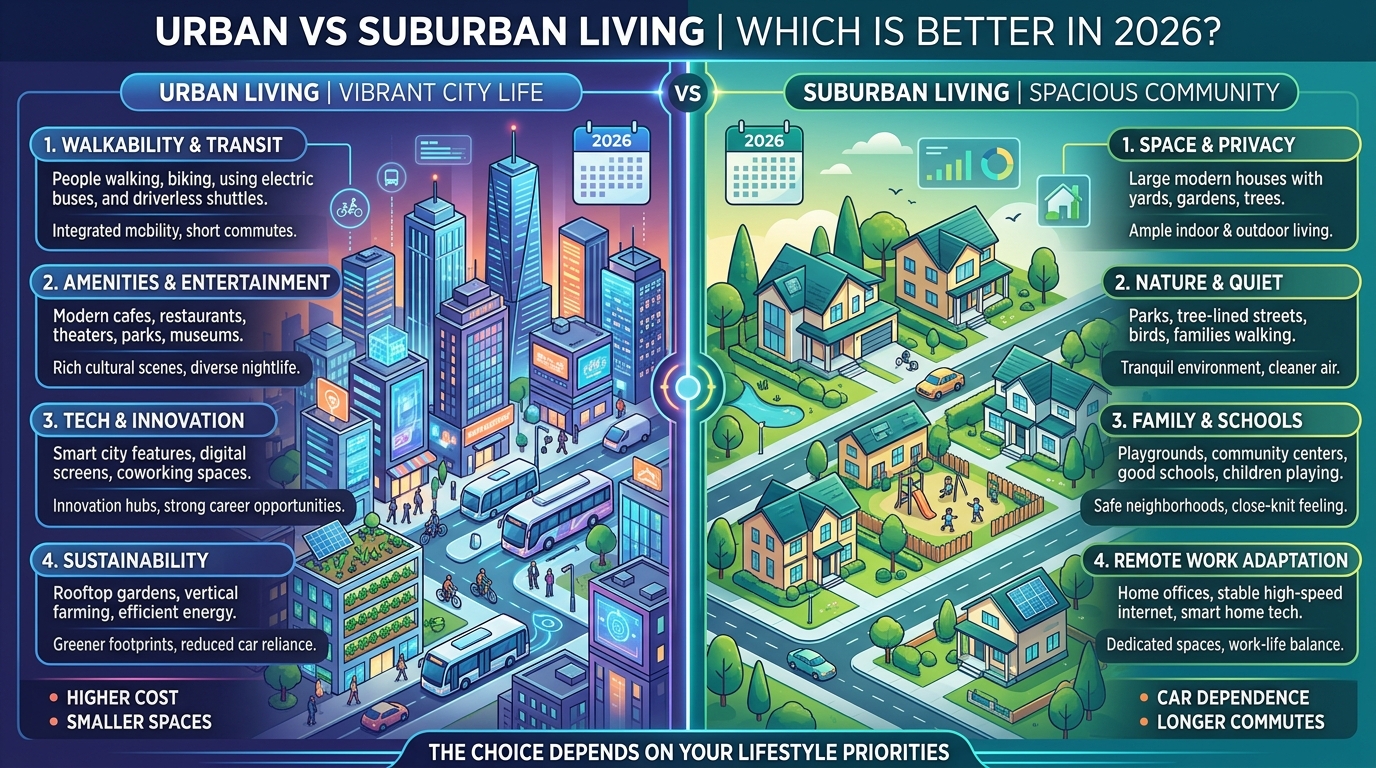
Urban living is characterized by fast-paced lifestyles, modern infrastructure, and easy access to entertainment, healthcare, and employment opportunities. Cities are often crowded but offer convenience and connectivity that many people value.
Suburban living, on the other hand, offers a slower and more peaceful lifestyle. It provides larger homes, open spaces, and a family-friendly environment. Many people choose suburbs to escape noise, pollution, and high living costs associated with cities.
Cost of Living Comparison
The cost of living is one of the biggest differences between urban and suburban areas. Cities generally have higher property prices, rent, and daily expenses due to demand and limited space.
Suburban areas are usually more affordable, offering larger homes at lower prices. This makes suburbs attractive for families and individuals looking to save money while maintaining a comfortable lifestyle.
Housing and Property Availability
Urban areas often face limited housing availability due to high demand and restricted land space. Apartments and high-rise buildings are common in cities, making housing compact but expensive.
In contrast, suburban regions offer more space and availability for residential development. Buyers can find larger homes, gardens, and modern housing communities at relatively lower prices.
Job Opportunities and Career Growth
Cities are known for offering more job opportunities across various industries such as finance, technology, healthcare, and business. This makes urban living attractive for professionals seeking career growth.
Suburban areas may have fewer job opportunities locally, but remote work has changed this trend significantly. Many people now live in suburbs while working remotely for companies located in cities or even other countries.
Transportation and Connectivity
Urban areas usually have better public transportation systems, including buses, trains, and metro services. This makes commuting easier for people without personal vehicles.
Suburban areas often rely more on private transportation. While this can increase travel time and costs, improved road networks are making suburbs more connected than ever before.
Quality of Life and Environment
Quality of life in suburban areas is often considered higher due to less pollution, more green spaces, and quieter surroundings. This makes suburbs ideal for families and individuals seeking a healthier lifestyle.
Urban areas, while vibrant and full of opportunities, often struggle with pollution, noise, and overcrowding. However, cities offer cultural diversity and entertainment options that suburbs may lack.
Education and Healthcare Facilities
Cities generally offer better access to top educational institutions and advanced healthcare facilities. This makes urban living appealing for families prioritizing education and medical services.
Suburban areas are improving in this aspect, with new schools, colleges, and healthcare centers being developed. However, access to specialized services may still require travel to urban centers.
Safety and Community Living
Suburban areas are often considered safer due to lower population density and quieter neighborhoods. Community living is stronger, and residents often know each other better.
Urban areas may experience higher crime rates in some regions due to population density. However, cities also have advanced security systems and emergency services to maintain safety.
Investment Potential in Real Estate
Urban properties typically offer higher rental income and faster appreciation due to demand and economic activity. This makes cities attractive for short-term and high-return investments.
Suburban properties are becoming increasingly popular for long-term investment. As cities expand, suburban areas often experience growth in property value, making them a strong future investment option.
Future Trends in Urban and Suburban Living
The future of living is expected to balance both urban and suburban advantages. Remote work, smart infrastructure, and digital connectivity are reducing the gap between the two.
Suburban areas are likely to grow rapidly as more people seek space and affordability, while cities will continue to remain centers of business and innovation.
FAQs
Which is better urban or suburban living in 2026
It depends on lifestyle needs, budget, and career goals. Urban areas offer opportunities, while suburbs offer space and affordability.
Is suburban living cheaper than urban living
Yes, suburban living is generally more affordable in terms of housing and daily expenses.
Do cities have better job opportunities
Yes, urban areas offer more diverse and higher-paying job opportunities.
Is suburban life better for families
Yes, suburbs often provide safer environments and larger living spaces, making them ideal for families.
Will suburban areas grow in the future
Yes, suburban areas are expected to grow due to remote work and urban expansion.
Conclusion
Urban and suburban living both offer unique advantages in 2026, and the choice depends on personal priorities and lifestyle preferences. While cities provide opportunities, connectivity, and convenience, suburbs offer affordability, space, and a peaceful environment. As modern living continues to evolve, both options will remain important, giving people the flexibility to choose what suits them best.