
Passive income through real estate has become one of the most attractive financial goals for investors in 2026. With rising property values, increasing rental demand, and growing urban development, many people see real estate as a stable way to earn money without active daily involvement. However, while the idea sounds simple, building true passive income requires planning, investment, and proper management. Understanding how it works helps investors decide whether it is truly worth it.
Real estate passive income mainly comes from rental properties, commercial spaces, or long-term property appreciation. Unlike active income, where you work daily for earnings, passive income allows you to earn while your assets grow in value or generate rent. But it also comes with responsibilities such as maintenance, tenant management, and market risk, which must be carefully considered before investing.
Understanding Passive Income in Real Estate
Passive income in real estate refers to money earned from property investments with minimal daily effort. The most common form is rental income, where tenants pay monthly rent for living or using the property. This creates a steady cash flow for property owners.
Another form of passive income is long-term appreciation, where the property increases in value over time. Investors earn profit when they sell the property at a higher price than the purchase cost. Both methods require initial effort but can provide long-term financial stability.
Rental Properties as a Source of Income
Rental properties are the most popular way to generate passive income in real estate. Residential apartments, houses, and commercial units can be rented out to tenants, providing consistent monthly earnings.
However, rental income is not completely passive. Property owners must manage tenants, handle repairs, and ensure timely payments. Many investors hire property management companies to reduce workload and make income more passive in nature.
Short-Term Rental Opportunities
Short-term rentals have become increasingly popular due to platforms that allow property owners to rent spaces for days or weeks. This method can generate higher income compared to traditional long-term rentals.
However, short-term rentals require more active management, including frequent cleaning, guest communication, and pricing adjustments. While profitable, it is less passive compared to long-term rental strategies.
Property Appreciation as Passive Wealth
Property appreciation is another important source of passive income. Over time, real estate values tend to increase due to inflation, development, and demand growth. Investors benefit when they sell the property at a higher price.
This strategy requires patience and long-term holding. It is considered passive because it does not require daily involvement, but it depends heavily on market conditions and location quality.
Location and Market Demand
Location plays a critical role in generating passive income from real estate. Properties in high-demand areas tend to attract better tenants and increase in value faster.
Investors should focus on locations with strong infrastructure, job opportunities, and future development plans. A good location ensures stable rental income and long-term appreciation.
Costs and Hidden Expenses
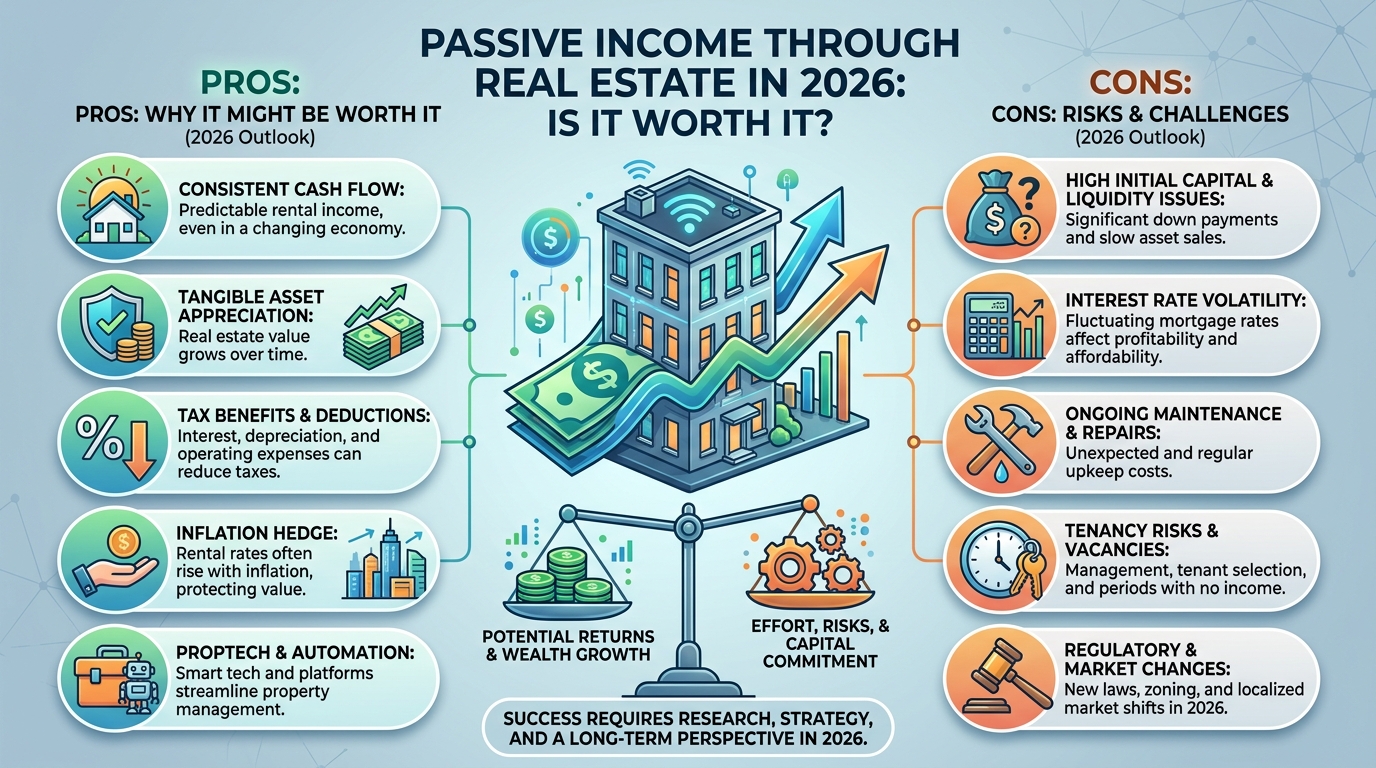
While real estate can generate passive income, it also comes with costs. These include maintenance, property taxes, insurance, and repair expenses. These costs reduce overall profit if not managed properly.
Unexpected expenses such as vacancy periods or major repairs can also impact income flow. Proper financial planning is necessary to ensure consistent returns.
Risk Factors in Passive Real Estate Income
Like any investment, real estate also carries risks. Market fluctuations can affect property value and rental demand. Economic downturns may reduce tenant availability or rental rates.
Another risk is property damage or unpaid rent from tenants. These issues can affect income stability and require careful risk management strategies.
Role of Property Management Services
Property management companies help investors make real estate income more passive. They handle tenant screening, rent collection, maintenance, and legal issues on behalf of property owners.
While these services reduce workload, they also charge fees, which slightly reduce overall profit. However, for many investors, the convenience and time savings are worth the cost.
Real Estate vs Other Passive Income Sources
Compared to other passive income options like stocks or digital assets, real estate offers more stability but requires higher initial investment. It is less volatile than many financial markets.
However, it is not completely risk-free. Investors must balance real estate with other income sources to create a diversified financial portfolio.
Is Passive Real Estate Income Worth It
Passive income through real estate can be highly rewarding if managed correctly. It provides long-term financial security, steady cash flow, and asset growth.
However, it is not completely effortless. Investors must be prepared for responsibilities and risks. With proper planning and management, it can be one of the most effective wealth-building strategies.
FAQs
What is passive income in real estate
It is income earned from property investments such as rent or property appreciation with minimal daily effort.
Is rental property truly passive income
It is partially passive because it still requires management, maintenance, and tenant handling.
Which is better long-term rental or short-term rental
Long-term rentals are more stable, while short-term rentals can generate higher but less consistent income.
What are the risks of passive real estate income
Risks include market fluctuations, maintenance costs, vacancies, and tenant issues.
Do I need a property manager for passive income
Not always, but property managers can help reduce workload and make income more passive.
Conclusion
Passive income through real estate in 2026 is a powerful wealth-building strategy that offers stability, growth, and long-term financial benefits. While it is not completely effortless, proper planning, location selection, and management can make it highly rewarding. For investors willing to handle responsibilities and risks, real estate remains one of the most reliable sources of passive income.