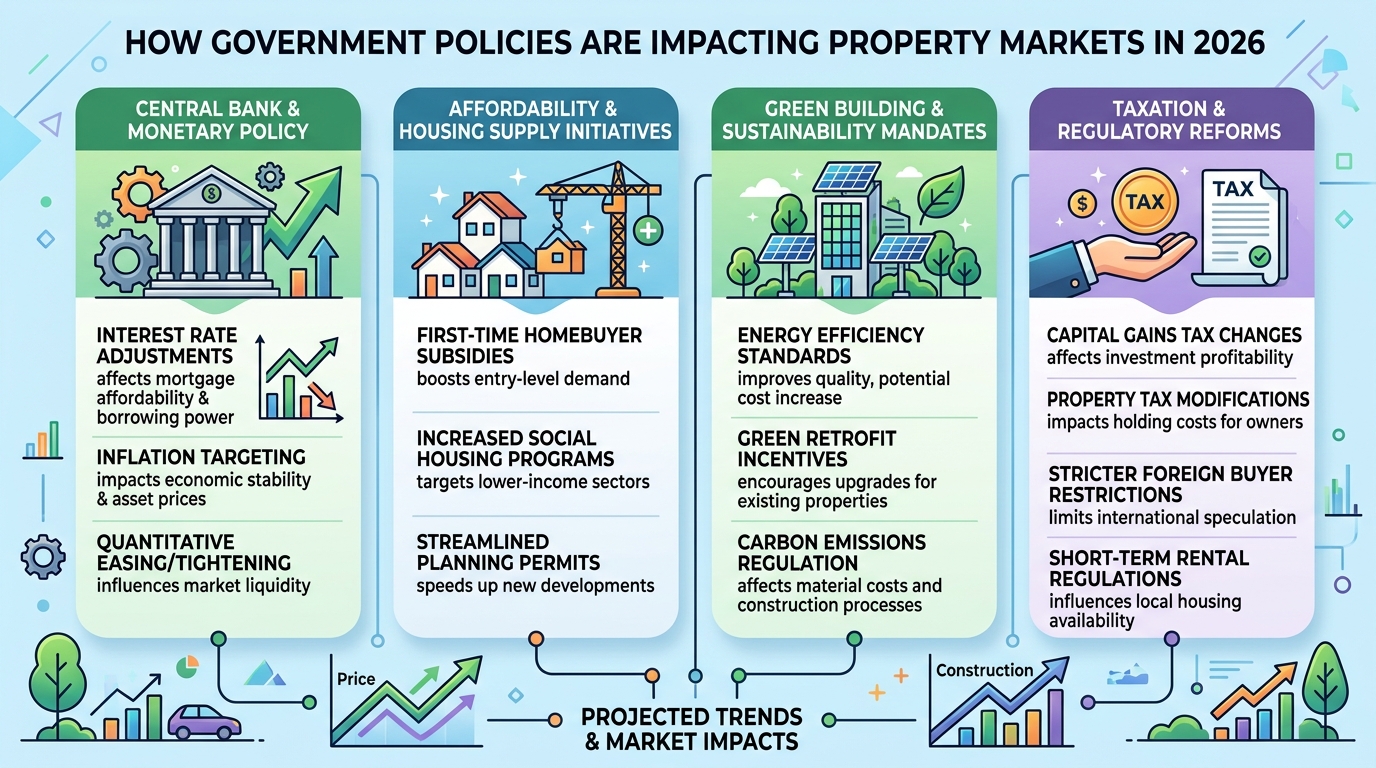

Government policies play a powerful role in shaping the real estate market, influencing everything from property prices to investment opportunities. In 2026, changes in housing regulations, tax structures, and financial support programs are having a direct impact on how people buy, sell, and invest in property. These policies are designed to improve affordability, regulate market stability, and encourage development, but they also create challenges for both buyers and investors. Understanding how these policies work is essential for navigating the modern real estate landscape.
Housing Policies and Affordability
Governments around the world are focusing on improving housing affordability by introducing various support programs. These include subsidies for first-time homebuyers, reduced interest rates on home loans, and financial assistance schemes aimed at low- and middle-income families. These initiatives are helping more people enter the housing market who previously could not afford to buy property.
However, while these policies increase accessibility, they can also drive up demand significantly. When more buyers enter the market, competition increases, which can lead to higher property prices. This creates a situation where affordability programs help in the short term but may contribute to price increases over time if supply does not keep up with demand.
Tax Policies and Real Estate Investment
Tax policies are another major factor influencing the real estate market. Governments often adjust property taxes, capital gains taxes, and rental income taxes to control market activity. Lower taxes can encourage investment, while higher taxes may discourage speculative buying and reduce market overheating.
In 2026, many regions are introducing stricter tax regulations on property investors to prevent excessive speculation. These measures aim to stabilize the market and ensure that housing remains accessible to genuine buyers rather than being dominated by investors seeking quick profits.
Impact of Interest Rate Regulations
Central banks and financial authorities play a key role in controlling interest rates, which directly affect real estate markets. Government-backed financial policies often determine how affordable borrowing will be for homebuyers. Lower interest rates make mortgages more accessible, while higher rates reduce purchasing power.
Recent policy changes have led to fluctuating interest rates, creating uncertainty among buyers. Many individuals are now taking a more cautious approach, carefully evaluating loan options and long-term repayment plans. This has slowed down some parts of the market while creating opportunities for others.
Zoning Laws and Urban Development
Zoning laws are an important aspect of government policy that affects how land can be used. These laws determine whether an area can be used for residential, commercial, or industrial purposes. Changes in zoning regulations can significantly impact property values and development opportunities.
In 2026, governments are updating zoning laws to support urban expansion and infrastructure development. This includes allowing higher-density housing in certain areas and encouraging mixed-use developments. These changes aim to address housing shortages and improve city planning.
Government Housing Schemes
Many governments are launching housing schemes to promote homeownership and support economic growth. These schemes often include affordable housing projects, low-cost financing options, and incentives for developers to build residential units.
Such initiatives are helping increase housing supply, especially in developing areas. However, the success of these programs depends on proper implementation and coordination between public and private sectors. Without efficient execution, these schemes may not achieve their intended goals.
Regulations on Foreign Investment
Foreign investment in real estate is another area influenced by government policies. Some countries encourage foreign buyers to invest in property to boost economic growth, while others impose restrictions to protect local buyers.
In recent years, stricter regulations have been introduced in many markets to control foreign ownership. These policies aim to prevent excessive price increases and ensure that local residents have better access to housing opportunities.
Environmental and Sustainability Policies
Environmental regulations are becoming increasingly important in the real estate sector. Governments are promoting sustainable development by encouraging energy-efficient buildings and eco-friendly construction practices.
These policies are influencing how developers design and build properties. Green buildings are becoming more popular as they reduce energy consumption and align with environmental goals. Buyers are also showing greater interest in sustainable homes, making this a key trend in 2026.
Challenges Created by Policy Changes
While government policies aim to improve the real estate market, they can also create challenges. Frequent changes in regulations can lead to uncertainty, making it difficult for investors and developers to plan long-term projects.
Compliance with new rules may also increase costs, especially for developers who need to meet stricter standards. These challenges highlight the importance of staying informed and adapting strategies to changing policy environments.
Opportunities for Buyers and Investors
Despite the challenges, government policies also create opportunities in the real estate market. Subsidies and financial support programs make it easier for first-time buyers to purchase homes.
Investors can benefit from policy-driven market changes by identifying emerging areas and new development opportunities. Understanding how policies influence the market allows individuals to make smarter and more strategic decisions.
FAQs
How do government policies affect property prices
Government policies influence demand, supply, and investment activity, which directly impact property prices.
What are housing schemes and how do they help buyers
Housing schemes provide financial support and incentives that make it easier for people to buy homes.
Why do governments regulate foreign investment in real estate
Regulations help control property prices and ensure that local buyers have fair access to housing.
How do tax policies impact real estate investors
Taxes can either encourage or discourage investment depending on their structure and rates.
What is the role of zoning laws in real estate
Zoning laws control how land is used and influence property development and market value.
Conclusion
Government policies play a crucial role in shaping the real estate market in 2026 by influencing affordability, investment trends, and development patterns. While these policies create both opportunities and challenges, staying informed about regulatory changes is essential for making smart real estate decisions. Buyers, sellers, and investors who understand these policies can better navigate the market and take advantage of emerging opportunities.